
Historic 1890s Home Receives Modern Backyard Transformation
When approaching the renovation of outdoor spaces for historic properties, designers often face a challenging question: Should the backyard mirror the home’s period architecture, or can it embrace contemporary aesthetics? For one remarkable 1890s residence, the answer came through creating a thoughtful dialogue between past and present that transforms the property’s outdoor living space into a modern retreat.
Unified Design Vision
Drawing inspiration from modern urban aesthetics, the backyard renovation creates a cohesive and inviting outdoor space that complements the historic character of this 1890s home. The design approach establishes a contemporary outdoor environment that respects the property’s heritage while introducing functional elements for today’s lifestyle needs.
Structural Elements: Foundation of Style
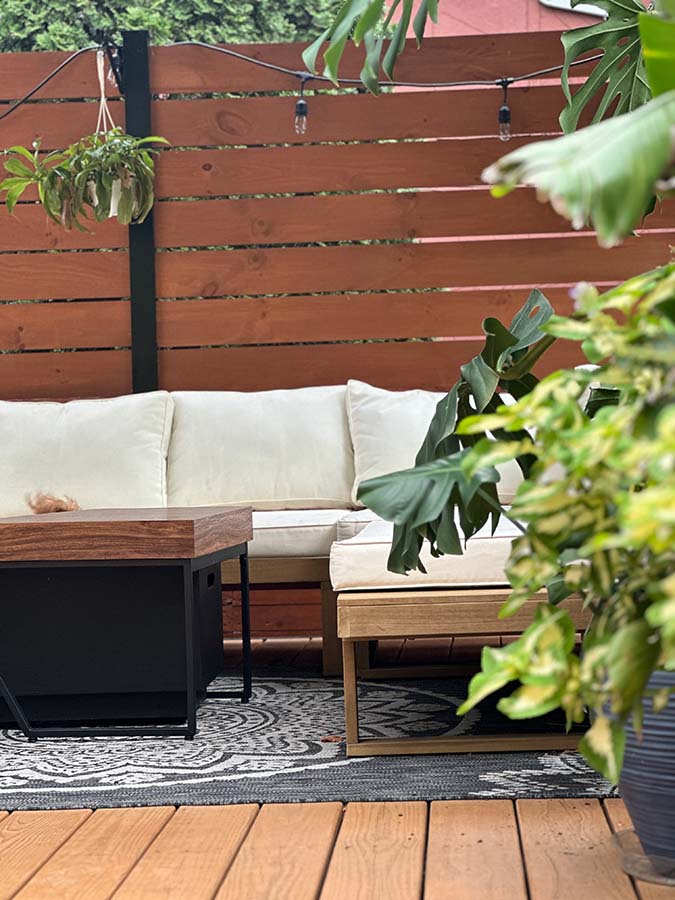
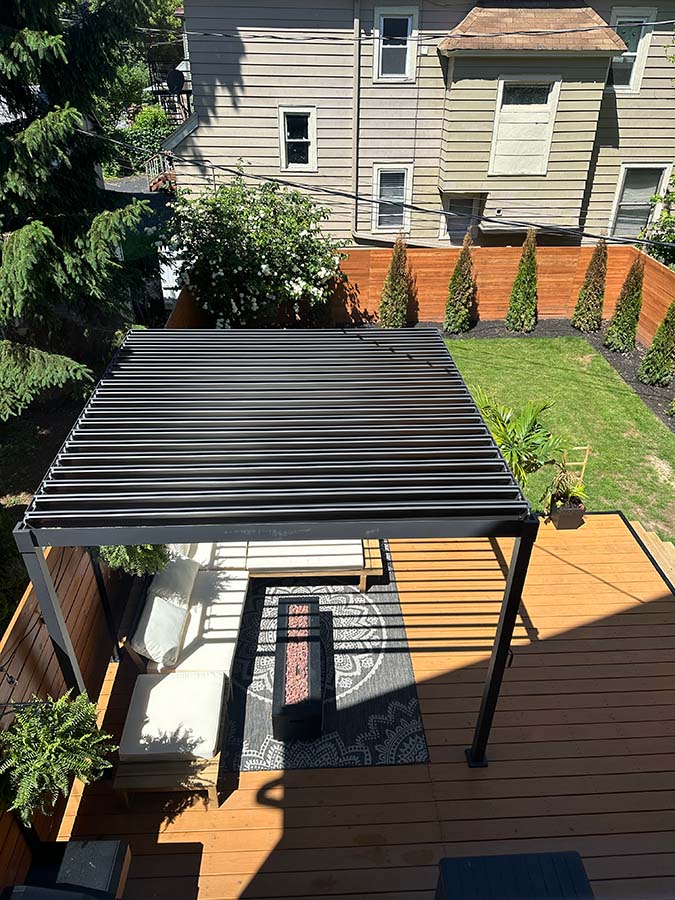
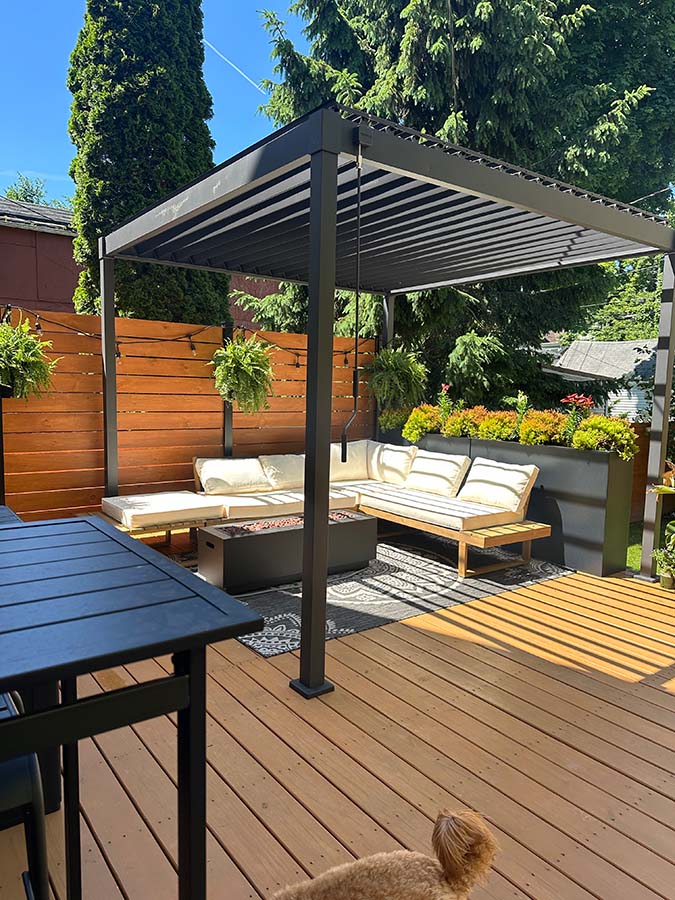
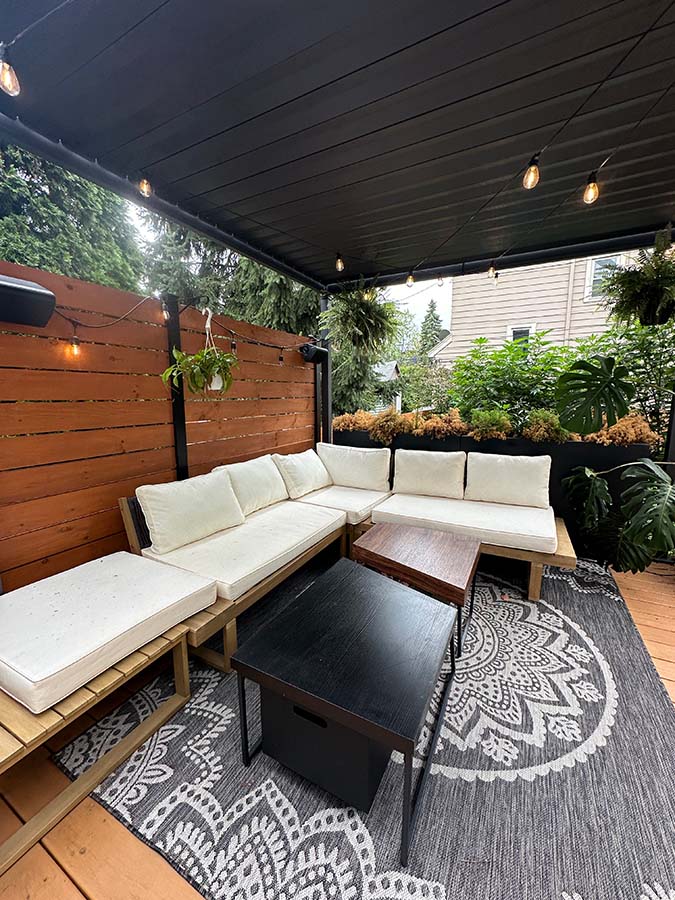
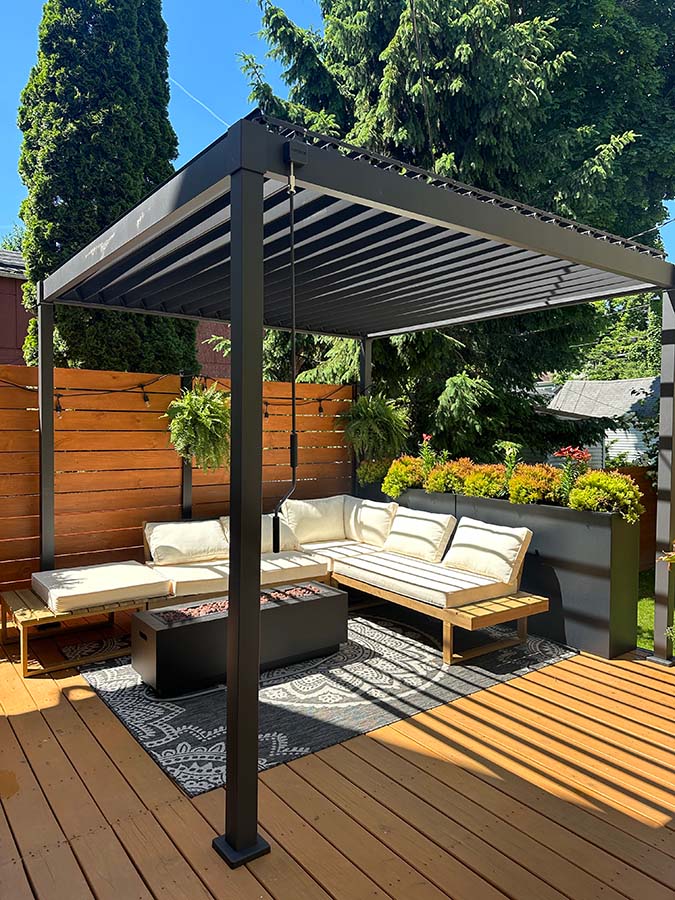
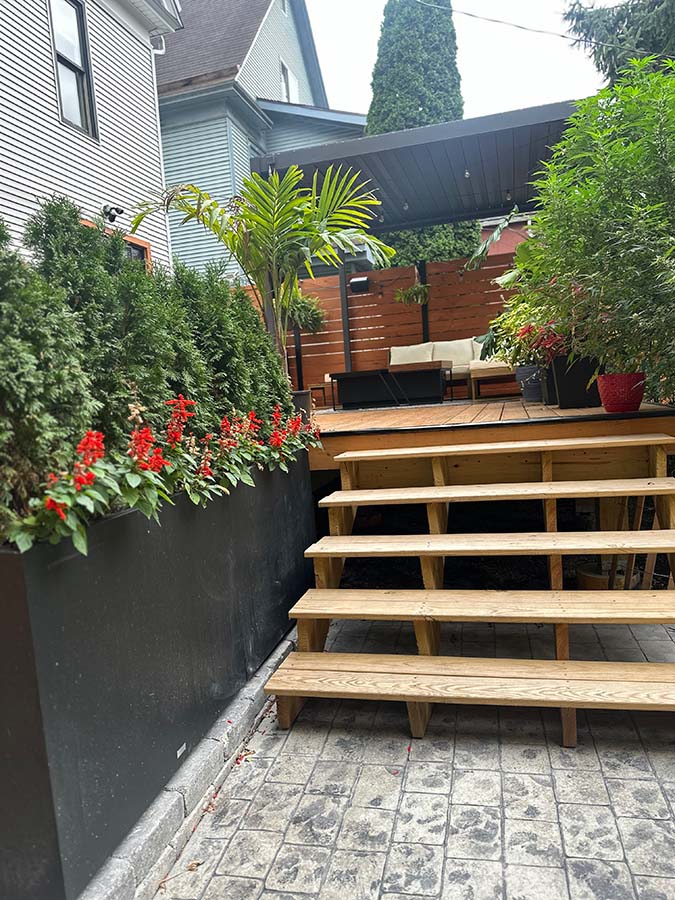
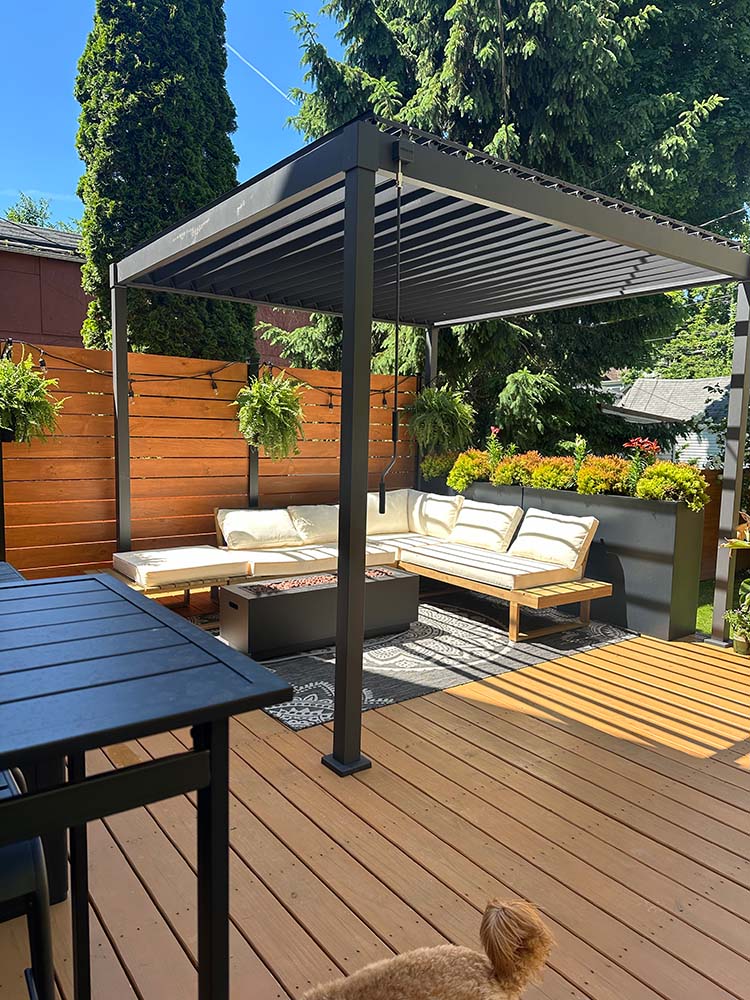
The transformation begins with the structural elements that define the space. Both the perimeter fence and elevated deck feature warm stained wood finishes that provide a sleek and functional foundation for the space while visually anchoring the yard’s design aesthetic.
The warm wood tones create a striking contrast with the home’s historic architecture while establishing a contemporary framework for the outdoor amenities. The raised deck serves multiple functions—creating usable flat space on what was previously an uneven yard, providing better sightlines across the property, and establishing distinct zones for different activities.
Year-Round Outdoor Living
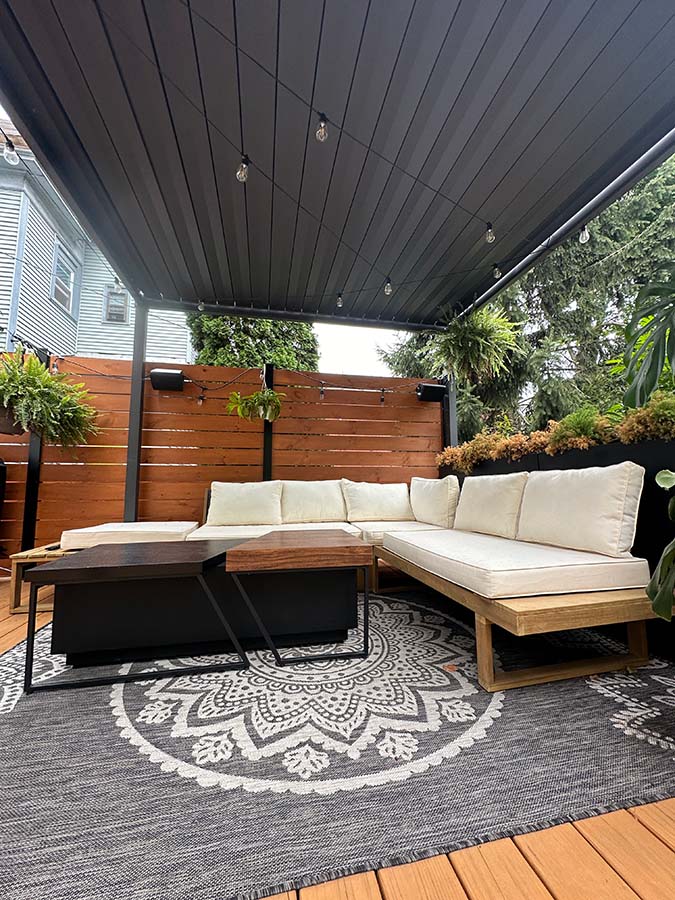
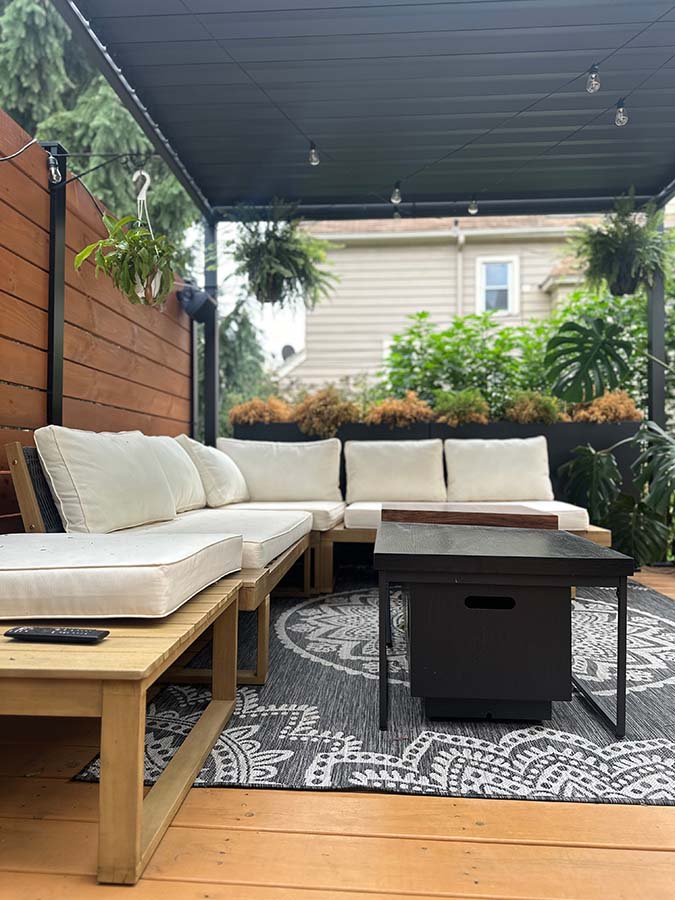
Central to the renovation is a sheltered modern seating area designed specifically for four-season enjoyment. This thoughtfully conceived space features:
- A contemporary outdoor fireplace that provides both warmth and visual focus
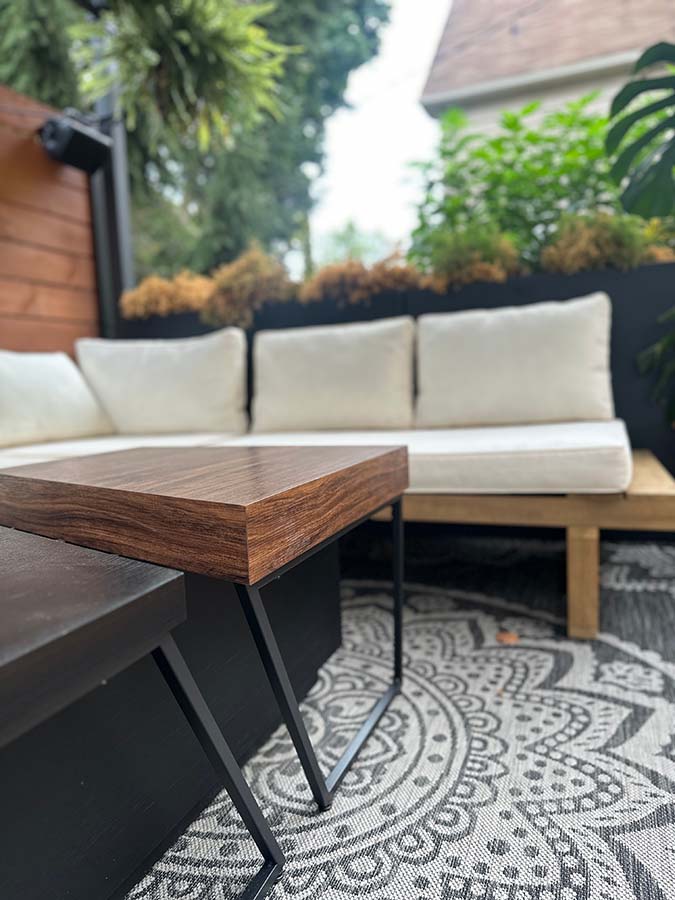
- A sliding coffee table that offers flexibility for different gathering sizes and uses
- Weather-resistant overhead cover to protect from both sun and precipitation
- Strategic positioning that maximizes privacy while maintaining connection to the rest of the yard
This seating area transforms what was previously a seasonally limited space into a true extension of the home’s living area, usable throughout changing weather conditions and temperatures.
Wellness Retreat Elements
Complementing the lounging space are elements specifically designed for relaxation and wellness. The contemporary sauna structure represents a standout feature of the renovation, crafted from black-stained pine wood that creates a deliberate visual contrast with both the house’s existing vinyl cladding and the redwood-stained deck.
The sauna’s dark exterior announces it as a distinctive design element while its clean lines and minimal detailing firmly establish it within the yard’s modern aesthetic. Inside, traditional sauna materials create an authentic wellness experience.
Adjacent to the sauna, a hot tub has been thoughtfully positioned at the same level as the deck, eliminating awkward transitions and ensuring easy movement between wellness amenities. This careful attention to elevation changes dramatically improves the functionality of the space while creating a more visually harmonious composition.
Material Selection and Contrasts
The material palette throughout the backyard renovation demonstrates careful consideration of both aesthetics and practicality. The decision to use black-stained pine for the sauna creates a dramatic counterpoint to the warmer tones of the deck and fence. This intentional contrast prevents the space from feeling monotonous while adding visual interest through varied textures and finishes.
The redwood stain selected for the deck enhances the natural beauty of the wood while providing necessary protection from the elements. This finish will develop a rich patina over time, adding character to the space as it ages, a nod to the historic nature of the property even within modern design elements.
Conclusion
The successful transformation of this 1890s home’s backyard demonstrates the potential for creating cohesive design narratives in outdoor spaces. The backyard renovation achieves a harmonious balance between historic architecture and contemporary outdoor living.
The resulting space—with its warm wood deck, sheltered seating area, and wellness amenities—provides year-round functionality while maintaining design integrity. Most importantly, it creates an outdoor environment that complements rather than competes with the home’s historic character, proving that respectful modernization can enhance rather than diminish architectural heritage.